Tuesday, 20 May 2014

The Impacts of Bottled water

FACT: In the US 1,500 water bottles are consumed every second.

Why is this bad for us?
The chemical used to make the bottle hard and clear is actually really harmful. If you consume it is said to sometimes lead to health problems such as cancer, brain problems and health problems in new born babies if consumed during pregnancy.
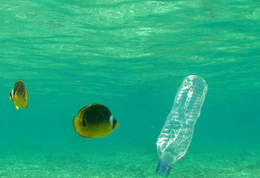
Why is this bad for the environment?
If you fill a plastic bottle ¼ full of liquid, this is about equivalent to the amount of oil used to make the bottle. It is also takes up a huge  of fossil fuels when it is transported. As well as this, we are actually just wasting water, as it takes three times the volume of water to manufacture one bottle of water than it does to fill it, and because of the chemical production of plastics that water is mostly unusable.
We found this out from an article by Norm Schriever on Huffingon Post: 

"Water bottles are made of completely recyclable polyethylene terephthalate (PET) plastics, but PETs don't biodegrade, they photodegrade, which means they break down into smaller fragments over time. Those fragments absorb toxins that pollute our waterways, contaminate our soil, and sicken animals (which we then eat)."

Thursday, 15 May 2014

Bottled water survey


We asked four questions to our class about bottled water. Twenty people were interviewed and all in all, the survey produced some very interesting results. Here is what we found out:


Do you often use bottled water?
Yes- 9                                                       No- 11

 Do you feel that the taste of bottled water is better than tap water?
Yes- 2                                                No-15                                          N/A- 3

 Do you think bottled water companies should tell people more about BPA and harmful chemicals?
Yes- 17                                             No- 2                                        N/A-1

Friday, 2 May 2014

Facts That Will Astound You

How much more does bottled water cost than tap water? Is it really all that “healthy”? These are facts from the University of Nottingham website.

Britain consumes 3bn litres of bottled water per year.

Typically bottled water retails at up to 500 times more than the price of tap water.

The bottled water market is the fastest growing drinks market in the world.
The UK bottled water industry is worth ~£2bn per year

For 2007 it is estimated that 13bn plastic bottles of water were sold in the UK of which only 3bn were recycled
162g of oil and seven litres of water are required to manufacture a single one litre volume disposable PET bottle and this amounts to the release of 100g of carbon dioxide (CO2) a major greenhouse gas (GHG)

Tuesday, 29 April 2014

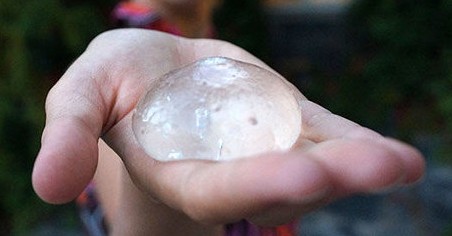
Ooho: The Edible Water Bottle!

The Ooho
Today, we discovered something incredible - some students from Imperial College, London managed to develop an edible plastic water "bottle" that might actually be able to rid the world of excess plastic waste.

If taken further, this bottle that looks surprisingly like a jellyfish could put an end to the bottled water industry. The packaging is  easy and cheap to make, strong, hygienic and biodegradable, making it a great choice for consumers.

Thursday, 24 April 2014

San Francisco's Bottle Ban

Earlier this year, Concord in Massachusetts became the first city in the U.S. to institute a citywide ban on plastic water bottles. However, it only has a population of about 17000, so the ban was not much of a challenge. Now, San Francisco has also created a ban on the bottles, which is set to be incredibly strict.

The ban would extends legislation passed in 2007 that forbids the use of city funds to purchase bottled water, and would make it illegal to sell bottled water of 21 fluid ounces or less on city property or food trucks, at large events, or in parks. If passed, the law would move San Francisco further towards its goal of producing zero net waste by 2020.

Tuesday, 22 April 2014

Interview with Ban the Bottle


We were incredibly fortunate to contact Ban the Bottle, a non-profit organisation which is devoted to banning plastic bottles. We have asked some questions which we hope will provide an insight into their work as well as show you how important it is to ban bottled water. You may have heard about the recent San Francisco bottled water ban. We have asked about that as well, and their answers were incredibly insightful and helpful. The answers are below:

Why do you think there is such a craze for bottled water? What we have heard from many is that bottled water is so popular do to its convenience. You don’t have to remember to fill up a water bottle before you leave the house or try to find somewhere to fill up when out in public. Unfortunately, the bottled water industry has convinced the public that bottled water is safer or cleaner than tap water which has in fact been proven incorrect through hundreds of studies.

 Why do you so strongly disagree with having bottled water? The plastic waste to our environment is immense and that’s not considering what it does to human health. Studies have shown the negative effects that BPA in water bottles has on humans. I recently posted an article that stated over 20 million tons of plastic enters the earth’s oceans each year and a large majority is bottled water.

Tuesday, 1 April 2014

Pricing of Bottled Water

One of the main reasons that people buy bottled water is that they think it's cheap. However, they are wrong...

After some research, we have come across a shocking quote from Nick Colas, a group chief market strategist. He says:

"The [bottled water] industry grossed a total of $11.8 billion on 9.7 billion gallons in 2012, making bottled water about $1.22/gallon nationwide and 300x the cost of a gallon of tap water," Colas says. "If we take into account the fact that almost 2/3 of all bottled water sales are single 16.9oz (500 mL) bottles, though, this cost is much, much higher: about $7.50 per gallon, according to the American Water Works Association. That’s almost 2,000x the cost of a gallon of tap water and twice the cost of a gallon of regular gasoline."